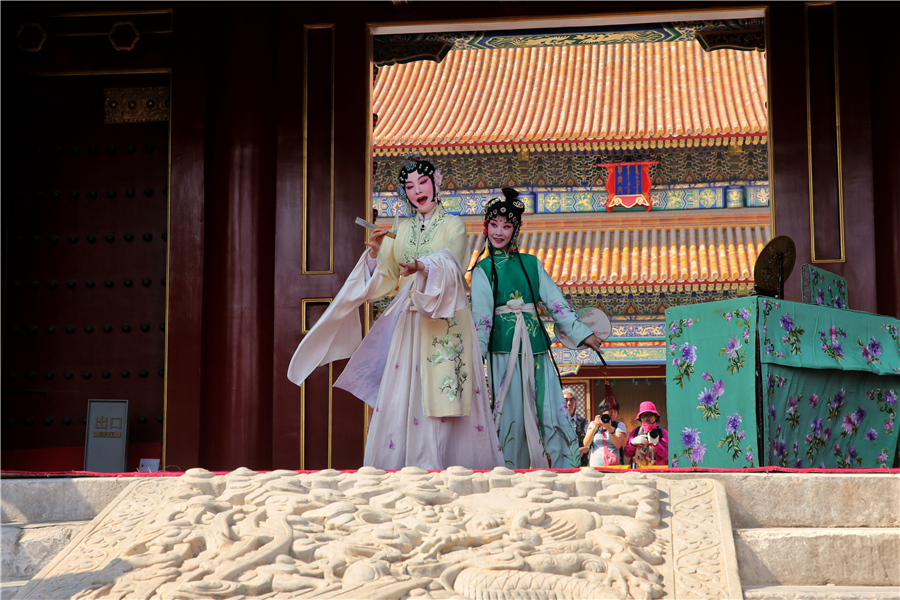
Cining Palace
Introduction
Cining Palace, also known as the Palace of Compassion and Tranquility, serves as a historical and cultural emblem within Beijing's Forbidden City. Originally commissioned as living quarters for imperial wives and consorts who outlived their emperor husbands, the palace complex holds significant historical and architectural value. First built in 1536, the palace underwent major renovations and enhancements.
One notable feature is the replacement of its single-eaved roof with a double-eaved roof, a signifier of its elevated status. The complex is guarded by a pair of bronze qilin, mythical creatures symbolizing auspiciousness and longevity, setting it apart from other palaces guarded by lions. Today, the Cining Palace is home to a sculpture gallery, where visitors can explore an extensive collection of Chinese sculptures spanning from the 6th century BC to the early 20th century.
History
The history of Cining Palace is deeply interwoven with the Qing Dynasty (1644-1911)'s imperial customs and architectural advancements. Initially established in 1653 by the Shunzhi Emperor, the palace served as a residence for widowed consorts of emperors, providing them with a dedicated space within the Forbidden City. This marked the beginning of its long-standing tradition as a sanctuary for elder palace women. In 1769, the Qianlong Emperor initiated significant renovations that not only enhanced the palace's architectural beauty but also elevated its symbolic importance.
The upgrade from a single-eaved to a double-eaved roof during this period is particularly noteworthy, as it reflects the emperor's intention to honor the elder generation of palace women. Over the centuries, the palace has witnessed various historical transformations, adapting to the changing cultural and political landscape of China.
Architecture
Design
The architectural design of Cining Palace is a testament to the intricate craftsmanship and aesthetic sensibilities of the Qing Dynasty. The palace showcases traditional Chinese architectural elements, harmoniously blended with unique features that set it apart from other structures in the Forbidden City. The double-eaved roof, introduced during the Qianlong Emperor's reign, exemplifies the palace's elevated status and serves as a prominent design element. The layout and design of the palace reflect the hierarchical structure and cultural values of the imperial court, emphasizing balance, symmetry and harmony.
Materials
Cining Palace is constructed using a variety of traditional materials that were prevalent during the Qing Dynasty. The primary materials include timber for the framework, tiles for the roofing and stone for the foundational elements. The use of bronze, as seen in the qilin statues guarding the entrance, adds a distinctive touch to the palace's exterior. These materials not only contribute to the palace's durability and longevity but also enhance its aesthetic appeal, reflecting the grandeur and sophistication of Qing Dynasty architecture.
Layout
The layout of Cining Palace is meticulously planned to accommodate the needs of the imperial consorts while reflecting the architectural principles of the period. The complex consists of multiple halls and courtyards, arranged in a manner that facilitates both privacy and ceremonial functions. The main hall, known as the Palace of Compassion and Tranquility, serves as the central focal point, surrounded by auxiliary buildings and corridors. This arrangement allows for a seamless flow of movement within the palace while maintaining the necessary segregation between different sections.
Cultural Significance
Cining Palace holds profound cultural significance, as it embodies the traditions and values of the Qing Dynasty's imperial court. It served not only as a residential space for the emperor's widowed consorts but also as a symbol of respect and honor towards the elder generation of palace women. The presence of the bronze qilin statues further accentuates this cultural narrative, representing auspiciousness and longevity. Today, as a sculpture gallery, the palace continues to play an important role in showcasing China's rich artistic heritage, offering visitors an opportunity to engage with historical and cultural narratives through its diverse sculpture collection.
Preservation Efforts
Efforts to restore and preserve Cining Palace have been undertaken to ensure its historical integrity and architectural splendor are maintained for future generations. These initiatives focus on repairing structural elements, restoring traditional décor, and safeguarding the palace's unique features, such as the double-eaved roof and bronze qilin statues. Preservation efforts also extend to the surrounding gardens and auxiliary buildings, ensuring that the entire complex remains an authentic representation of Qing Dynasty architecture and cultural heritage.








